A buyer scanning the North Shore sees River Hills near the top of every price band and assumes the market must move quickly to match. Then the same listing shows up week after week. The village is not slow because demand is soft. It is slow because a 1930 zoning framework turned every transaction into a bespoke match, and the numbers on the portal read strangely until you understand the mechanism underneath them.
That is the thesis of this post. If you are comparing River Hills to Fox Point, Mequon, or Bayside, the median price tells you almost nothing. The lot rules, the buildable-parcel count, and the Building Board review process tell you almost everything.
The numbers that look contradictory
Pull three sources for the same market in the same month and you get three different stories.
| Source | Metric | Reading |
|---|---|---|
| Zillow ZHVI, updated 6/30/2026 | Average home value $964,500, up 7.2% year over year | Prices firming |
| Movoto, June 2026 | Median list $997K, median $261 per square foot, 41 median days on market | Active and moving |
| Homes.com, trailing 12 months to mid-2026 | Median sale ~$984,645, 164 average days on market | Slow to clear |
| Milwaukee County comparison, April 2026 | 65 median days on market | River Hills roughly 2 to 2.5x county norm |
The prices agree. The pace does not. The reason is sample size: only a handful of homes trade in any given quarter, and one 21,000 square foot sale like 8263 N River Rd, which closed at $3,749,900 in April 2026, drags every average around with it. What looks like volatility is thin turnover in a village of roughly 1,600 residents.
The mechanism: a village designed to stay illiquid
River Hills incorporated in 1930 with zoning laws written specifically to keep the community low density. According to reporting on the ongoing Eder Farm dispute, about 85% of the village is zoned for single-family homes on a five-acre minimum, roughly 13% sits on two-acre minimums, and 2% on one-acre minimums. There is no multi-family zoning. There is no commercial zoning outside the private Milwaukee Country Club and River Tennis Club.
The Southeastern Wisconsin Regional Planning Commission's zoning summary makes the contrast concrete. The smallest single-family lot allowed in River Hills is 43,560 square feet, which is one full acre. In Shorewood it is 4,500 square feet. In Whitefish Bay it is 4,800.
Three consequences flow directly from that framework.
Supply is fixed. Reporting in Urban Milwaukee found that between 2004 and 2017, only 23 new homes were built in River Hills, and only 11 of those went on previously vacant lots. As of 2021, roughly 38 buildable parcels remained in the entire village outside of Eder Farm. Sellers are not competing against a pipeline of new construction. Buyers are not choosing among substitutes.
Buildings are constrained relative to their lots. The Village of River Hills Construction Guidelines cap total building footprint at 4% of lot size on parcels of five acres or more, 7% on two-acre lots, and 8% on one-acre lots. Structures cannot exceed 26 feet to the eaves or 40 feet to the ridge. A five-acre lot allows roughly 8,700 square feet of total building footprint, spread across the house, garage, pool house, and any accessory structures. This is why estate-scale homes here tend to sprawl horizontally under a canopy rather than climbing.
Approval is discretionary. Every new build, major addition, pool, tennis court, and landscape plan runs through the Village Building Board. Setbacks alone eat significant land. Existing homes are grandfathered at 100 feet from the center of the road and 20 feet from side and rear lot lines, but the guidelines discourage building anywhere near that minimum.
What $1 million actually buys in this village
The median list price and the median product diverge more sharply here than in almost any nearby suburb. Consider what shows up in the same price band in mid-2026:
- Around $880,000 to $1,000,000, the inventory splits between roughly 2,000 to 2,750 square foot condominium units at 1723 and 1748 N River Circle, and single-family homes closer to five or six bedrooms that need meaningful updating. Two very different products.
- Around $1.1 to $1.2 million, the market opens up to 4,000 to 5,000 square foot homes, sometimes on smaller two-acre lots.
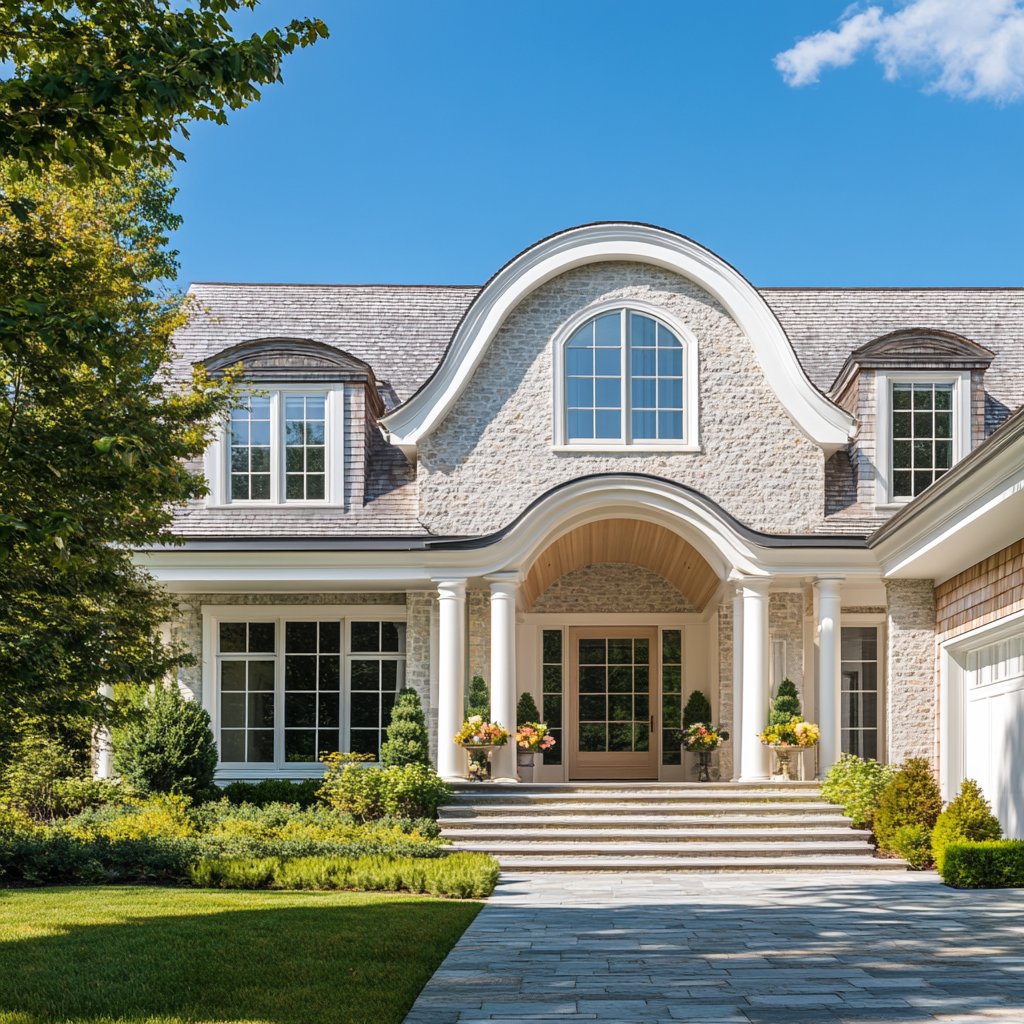
- At $1.35 million and above, you begin to see the newer construction and the estate lots that read as classic River Hills, including properties on Green Bay Court and along the Milwaukee River corridor near Range Line Road.
- Land alone runs roughly $306,873 per acre based on current listings tracked by LandSearch, which means a raw five-acre parcel starts near $1.5 million before you build.
The point is not that River Hills is expensive. Buyers already know that. The point is that price per square foot ($261 median in June 2026 per Movoto) understates the range. A buyer at $1 million is choosing between a low-maintenance condo at The Grove, an older estate needing a kitchen and baths, or a comparable-sized home in Fox Point or Bayside on a smaller lot with faster access to retail. Those are not the same decision.
The transaction frictions that only surface at closing
Because so much of the housing stock predates modern utility infrastructure and sits on multi-acre parcels, buyers under contract encounter a set of inspections and reviews that are unusual for the North Shore:
- Private wells and on-site waste treatment. Many properties are on private well and septic systems (POWTS) rather than municipal water and sewer. Well-flow tests, water quality panels, and septic inspections belong on the timeline from the day the offer is written.
- Building Board review for anything you plan to change. A buyer who intends to add a pool, expand a garage, or replace fencing should read the Construction Guidelines before writing the offer, not after. Fence height, materials, color, and even the direction the supporting bracing faces are addressed in the ordinance.
- Outdoor lighting rules. Section 30.55 of the village ordinances restricts glare and spillover onto neighboring property, and the guidelines recommend limiting tree lighting to under 50 incandescent watts. Sellers with elaborate exterior lighting sometimes need to modify it before closing.
- Longer marketing windows are structural, not diagnostic. A home sitting for 120 days in River Hills does not carry the same signal as a home sitting 120 days in Shorewood. With fewer than a dozen active listings at any given time and a highly specific buyer profile, matched-buyer marketing takes months by design. Price reductions here should be read against the village norm, not the county norm.
- Grandfathered setbacks. Older homes may sit closer to lot lines than current rules allow. That is legally permitted for the original structure but restricts what you can add and where.
For sellers, the same mechanisms cut the other way. Pre-listing well and septic work, a documented Building Board history, and staging that reads for an estate buyer rather than a typical suburban shopper all shorten the timeline meaningfully.
The amenity substitution
Because the village allows no retail, no restaurants, and no offices, daily life happens across the border. That is not a defect. It is the trade the zoning was written to make. Residents draw on the Milwaukee Country Club and the private River Tennis Club within the village, then rely on adjacent Bayside, Fox Point, and Glendale for groceries, dining, and services. The Lynden Sculpture Garden, a 40-acre public art park within River Hills, and the Schlitz Audubon Nature Center just east on Lake Michigan absorb most of the weekend recreation. Families in the village generally attend Indian Hill Elementary, Maple Dale Elementary in Fox Point, and Nicolet High School, or the private University School of Milwaukee, which traces its founding to 1851. Nicolet is currently undergoing a significant facilities renovation.
Downtown Milwaukee sits 10 to 15 minutes south via I-43. That commute, combined with the acreage rules, is why the village has held its character through eight decades of metropolitan growth.
A short FAQ
Is the long days-on-market figure a warning sign?
Usually no. It reflects thin inventory and estate-scale properties that require a specific buyer. Read individual price history, not the village median, to judge whether a particular home is stale.
Can I subdivide a five-acre lot after I buy?
Almost never. The 5-acre minimum applies to new lots as well as existing ones, and the village has repeatedly defended its zoning in court, most recently in the Eder Farm litigation.
Will the Eder Farm situation change the market?
Possibly, but slowly. The village purchased the 53.4-acre parcel through a Tax Incremental District for $2,504,000 and has explored a limited-density plan alongside a stormwater preserve tied to the Milwaukee Metropolitan Sewerage District. Any new units would be a small share of overall supply.
Are there any low-maintenance options?
Yes. The condominium buildings on N River Circle and the newer construction at The Grove at River Hills offer clubhouse amenities and single-level living for buyers who want the address without the acreage.
How should I compare River Hills to Mequon or Fox Point?
Not on price per square foot. Compare acreage, well and septic status, Building Board review scope for any changes you plan, and access to the services you actually use week to week.
If you are weighing River Hills against another North Shore community, the details that decide the transaction rarely appear on the listing sheet. The Wright Group has spent years reading this village lot by lot, and we would welcome the chance to walk you through what your budget actually buys here before you write an offer. Reach out when you are ready.